


Opinion Article: The Power of the Group in Adolescence – Learning, Growth, Relationships
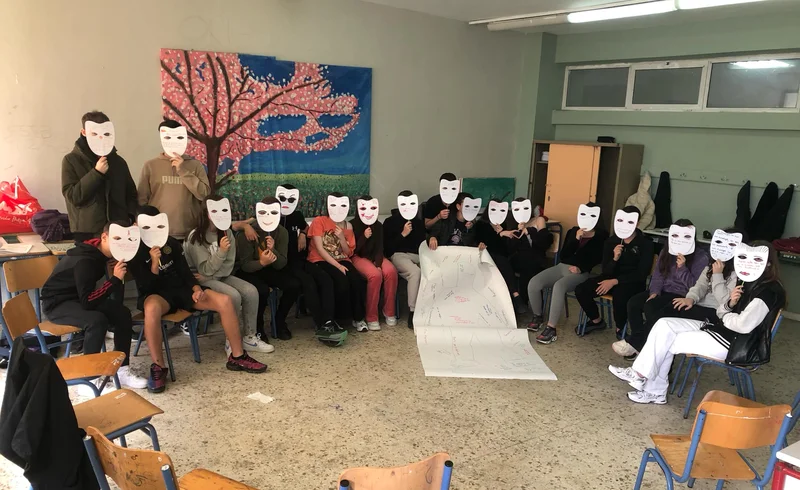
How school-based group activities enhance participation, psychosocial development, and meaningful learning in adolescents, and how the Active Schools Network of the Child & Adolescent Mental Health Initiative supports this process?
by Katerina Pronoiti*
The Youth Engagement Scheme (YES) program is a core pillar of the Child & Adolescent Mental Health Initiative (CAMHI). In the 2024–25 school year, the program launched the Active Schools Network for the Mental Well-being and Welfare of Students. Within this framework, public schools across the country began organizing student meetings, introducing the value of group dialogue activities in schools as an alternative form of learning and psychosocial empowerment for adolescents. To date, 108 public schools have joined the Active Schools Network.
The program serves as a framework for cultivating social and emotional skills, enhancing awareness, and promoting collaborative learning. Teachers take on the role of facilitators, and classrooms become “groups.”
Modern approaches to learning recognize that educating adolescents extends beyond cognitive development, encompassing social and emotional maturation, social integration, and life skills development. In this context, using the group as a pedagogical tool emerges as an effective approach that strengthens participation, interaction, and reflective learning.
The Group as a Learning Environment
Giorgos Moschos, director of the Youth Engagement Scheme, explains how the activities work: “In collaboration with the Ministry of Education and teachers, we support and monitor the regular implementation of dialogue activities for mental wellbeing, providing supporting materials to as many secondary school classrooms as possible. This allows us to document and subsequently propose the systematic integration of similar activities in schools, alongside teacher training on child and adolescent mental health. We believe this is a right of the children and a responsibility of society.”
But how does the Network operate, and what role does the group play? It is a dynamic system where members interact, co-construct meaning, and develop shared communication norms. Communication itself is a form of relationship: the way members speak, listen, and respond can transform both individual participants and the emergent properties of the system as a whole.
In schools, the group-based collaborative structure enhances active listening and participation. Students move from a passive audience role to an active role in the learning process, taking part in discussions, decision-making, and experiential exercises. They listen actively to others, give space for opinions, and co-shape the content of the learning experience. They learn first to listen, then to contribute.
The group also serves as a space for cultivating empathy, self-regulation, and cooperation—skills critical for adolescents’ mental resilience and academic success. The presence of clear rules, such as confidentiality, respect, and equal participation, helps create a “safe space” where adolescents can express concerns, uncertainties, or personal experiences without fear of stigma. This gradually fosters a culture of safety and acceptance, particularly important during the transitional period of adolescence.
Psychopedagogical Principles of Group Activities
“Dialogue activities in schools give children the chance to step away from the rigid lesson schedule, to play, create, listen to others, and share their views,” emphasizes Savvas Metaxas, coordinator of adolescent advisory groups and educational activities in the YES Program. “They can also see and approach teachers differently, in a setting distinct from the classroom lesson.”
However, these activities are not spontaneous play—they are grounded in pedagogical principles that ensure both the smooth functioning of the group and educational effectiveness. Moving students from superficial participation to meaningful communication and dialogue requires clear role definitions, cultivation of active listening, and consistent, discreet facilitation by the teacher.
Structured in this way, the group functions as a mirror, allowing adolescents to recognize personal needs, emotions, and cognitive patterns through interaction, feedback, and shared exploration of experiences. Collective effort, conflict resolution processes, and joint decision-making reinforce a sense of belonging and strengthen students’ commitment to the group.
Systematic participation in activities that encourage understanding and acceptance of different perspectives can help reduce aggressive or dismissive behaviors and gradually foster a culture of respect and collaboration in schools. Each child, each adolescent, should feel that they contribute something unique to the group while also receiving something equally meaningful in return.
The Critical Role of the Teacher
The teacher plays a pivotal role in promoting group-based activities in schools. While remaining central to the educational process, their role shifts from the primary knowledge transmitter in the traditional approach to a facilitator, coordinator, and motivator in participatory, group-based learning. This shift is not merely methodological—it reflects a deeply pedagogical philosophy of collaborative, experiential learning, where collective exploration and psychosocial development take priority.
Teachers also regulate and enhance participation, encouraging students to take initiative, share thoughts, and engage in the collective process. For students who hesitate or withdraw, encouragement respects their personal pace and boundaries. The goal is not forced participation, but gradual engagement through the development of trust.
Observation is a key element of this process. Teachers need to monitor each student’s behavior in the group—how, where, and why they choose to remain silent or withdraw. They must also observe their own behavior: whom they give the floor to, how long they wait, and how genuinely they listen to adolescents’ views.
Another critical aspect of the teacher’s role is managing group dynamics. A group is a living system, progressing through stages (forming, storming, norming, performing), each requiring different interventions. Members are interdependent and interrelated, ultimately responsible for resolving arising issues. The teacher supports this relationship by fostering trust, promoting communication, and strengthening connections.
Through this process, the teacher-student relationship transforms. It is no longer a vertical authority structure, but a relationship of collaboration, mutual trust, and respect, where the teacher guides, supports, and accompanies without imposing. Learning becomes a shared, interactive experience rather than a one-way process.
Overall, the teacher-facilitator role is pivotal to the success of group interventions in schools. It is not merely a technical skill, but a pedagogical stance that views the child as an active participant, learning as relational, and the group as a living field of development.
What the Teachers Said
Feedback from participating teachers during the 2023–24 school year highlighted the following:
“Working in groups allowed all students to express mainly negative feelings they experience, as well as discuss behaviors they notice but cannot openly discuss in the usual timetable.”
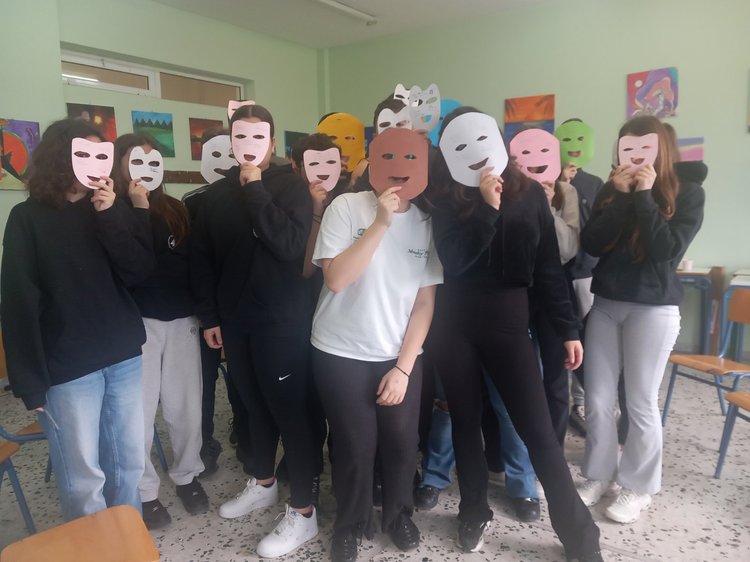
“Activities like this help children express themselves, reflect, interact, get closer, and confront taboos and prejudices. Students were enthusiastic, as anything beyond the limits of formal education resonates strongly with them.”
“It was an opportunity to change the classroom, sit in a circle, and learn things about classmates they didn’t know.”
“The discussion highlighted the importance of safety that children need to feel to open up to peers or a teacher. They also stressed the need for a psychologist present daily at school.”
Key Takeaways
The collaborative group approach, as a pedagogical practice, constitutes a comprehensive learning framework that supports not only cognitive but also mental and social development in adolescents. Integrating it into the educational system can help adopt a human-centered model of education that leverages dialogue, collaboration, and experiential learning as core drivers of learning.
Moreover, the establishment of groups within schools supports essential steps for psychosocial differentiation: taking another’s perspective, cooperating, and engaging in dialogue with group members. This dialogue requires trust, sharing, honesty, and—most importantly—absence of control.
It is, therefore, a necessary innovation for schools aiming to nurture not only knowledgeable but also mentally resilient, collaborative, and socially aware individuals.
Katerina Pronoiti is the YES Administrative Support and Monitoring Lead for the Youth Engagement Scheme at the Child & Adolescent Mental Health Initiative.
The Child & Adolescent Mental Health Initiative’s programs are designed and implemented by a nationwide network of public-sector mental health organizations and professionals, in collaboration with the Child Mind Institute (New York) and with the support of the Ministry of Health.
The Child & Adolescent Mental Health Initiative is exclusively supported by the Stavros Niarchos Foundation (SNF) as part of SNF's Global Health Initiative.